
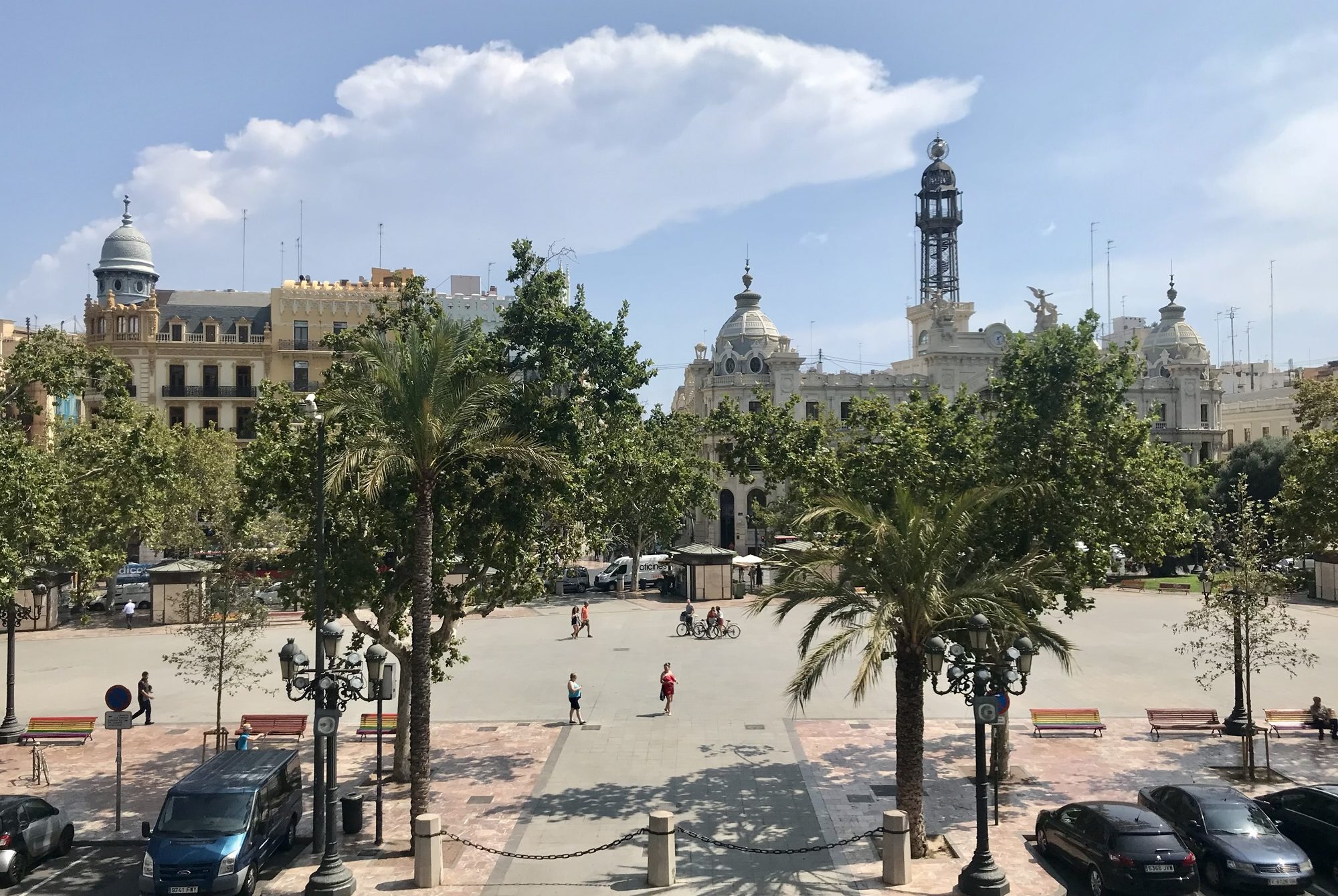
With its Mediterranean climate, abundant cultural offering, historic old town, and world-renowned gastronomy, it’s easy to see why Valencia has become such a popular tourist destination. Yet this popularity comes at a cost: much like Barcelona before it, Valencia is now facing the unwanted consequences of overtourism. In this local’s guide, I provide recommendations on what to avoid in the city – and what to do instead – to maximise your visit while minimising your visitor footprint.
Where to stay
- Avoid… staying in bajos turísticos in ordinary residential areas of the city.
In Valencia, ground-floor units in residential buildings typically house bakeries, bars, shops, and other businesses that provide value to the local community. In recent years, however, some of these spaces have been converted into bajos turísticos. Many Valencians feel that these ground-floor holiday apartments are turning residential neighbourhoods into tourist hotspots and stripping away their local identity.
- Instead… choose from a broad selection of purpose-built accommodation in established tourist zones.
Valencia has all manner of accommodation options available – from budget hostels to high-end hotels, and everything in between. There’s really no need to opt for a bajo turístico in a residential area when you can stay in a reasonably priced hotel near the Old Town or beaches.
What to do
- Avoid… attending a bullfight…
… unless you like the idea of little men in funny costumes performing gratuitous acts of animal cruelty. Who am I to judge anyway? In all seriousness, whatever your opinion on it, bullfighting once had huge cultural significance in Spain. Yet some things are best left confined to the annals of history, and bullfighting – in my opinion (but also in that of over three-quarters of Spaniards) – is one of them.

‘¡No es cultura; es tortura!‘ – ‘It’s not culture; it’s torture!’, reads graffiti on the plinth of a matador statue outside Valencia’s Plaza de Toros (bullring).
- Instead… enjoy the diversity of cruelty-free cultural experiences that Valencia has to offer.
When it comes to cultural experiences, visitors to Valencia truly are spoilt for choice. The Old Town and its immediate surroundings are a treasure trove of historic architecture (the 13th-century cathedral, El Miguelete, the Serranos and Quart towers, La Lonja de la Seda), food markets (Central Market, Colón Market), and museums and galleries (the National Museum of Ceramics, the Museum of Fine Arts, L’ETNO, Centre del Carme Cultura Contemporània).
The courtyard of the Museo del Patriarca, central Valencia.

A 30–40-minute walk south-east of the Old Town, within the Turia Garden (formerly a river that was diverted to prevent further flooding), is the City of Arts and Sciences. This complex of eye-catching, futuristic architecture houses a science museum, a planetarium, and concert and exhibition halls. To the east lie Valencia’s beaches and port, which border El Cabanyal – a trendy former fishermen’s quarter.

Valencia’s City of Arts and Sciences.
Where to eat
- Avoid… eating paella in the city centre.
While Spain’s national dish has its origins in the Valencian Community, the paella served in and around the Old Town tends to be overpriced, inauthentic, and aimed at tourists.
- Instead… eat paella in El Palmar de Valencia.
Situated in Albufera Natural Park roughly 40 minutes by bus from the City of Arts and Sciences, El Palmar de Valencia is the home and birthplace of paella. The village borders rice fields to the west, south, and east, and the marshes of L’Albufera – Iberia’s largest freshwater lagoon – to the north. This fertile setting provided the ingredients that, when expertly combined in a paella (pan), gave rise to the most iconic of Valencian dishes.
A classic paella Valenciana, consisting of local short-grain rice, chicken, rabbit, green beans, butter beans, tomato, saffron, sweet paprika, extra virgin olive oil, water, and salt.


A rice field bordering El Palmar.
While I haven’t visited El Palmar enough times to recommend one restaurant over another, I imagine it’s hard to go wrong. Whichever you choose, though, be sure to book a table in advance as the village gets incredibly busy around lunchtime. If you have time, consider combining your visit to El Palmar with a boat tour of the lagoon, or a walk through the pine forest and along the beach at nearby El Saler.
Weaving through the marshland of L’Albufera on a boat tour from outside El Palmar.


A barraca – a traditional Valencian house for farmers or fisherfolk – on the shore of L’Albufera.
Of course, just because you shouldn’t, in my opinion, eat paella in central Valencia doesn’t mean you shouldn’t eat there at all. The city’s Old Town is brimming with authentic, high-quality food options. There are tapas bars everywhere, along with restaurants serving a variety of Valencian main dishes such as arroz al horno (oven-baked rice) and fideuà (seafood noodles).
Certainly don’t miss out on the local tradition of almuerzo. Known as ‘esmorzaret’ in Valencian, this mid-morning meal consists of a bocadillo (baguette sandwich) with your choice of filling, typically accompanied by olives and/or peanuts, a drink, and a dessert or coffee. It’s a tasty, filling, no-frills feast that provides great value for money.
When to visit
Avoid… visiting Valencia during the Fallas festival (late February to 19 March)…
… if you value sleep and plan to take in the city’s sights and culinary delights at a leisurely pace. Having said that, Fallas is a truly bucket-list-worthy event that may – depending on your disposition and tolerance for noise – be worth experiencing once in life.
In an earlier piece, A grouch’s guide to Valencia’s Fallas festival, I wrote: ‘On the one hand, Valencia never feels more alive with energy and colour than during Fallas; on the other, it’s never more crowded, noisy, and overwhelming.’ I really couldn’t have put it better myself.
The daily Mascletà, a mid-afternoon fireworks display, during Fallas 2019.

Also avoid… visiting in summer.
Summer is Valencia’s peak tourist season. From June to August, the city is unbearably hot and, with many locals escaping the heat to be replaced by crowds of tourists, can feel like one big holiday resort.
Instead… visit in autumn.
Autumn is the perfect time to visit Valencia for several reasons. It’s cooler than summer while still being warm enough – in September and October, at least – to dine outdoors and swim. It’s also considerably less busy than during the school holidays and Fallas, making it far easier to get around the city – and get a good night’s sleep. In addition, visiting in autumn should save you some money on flights and accommodation.

For more on Valencia and beyond, subscribe at the top of the page and leave a comment below. I’d be happy to answer any of your questions.

Share your thoughts: